Interior Renovation Work: Why a Good Project Starts Long Before Construction
When people think about interior renovation, they often immediately imagine demolition, tradespeople, materials or finishes. Yet interior renovation work begins long before the first team arrives on site.
Renovating an apartment or house is now a complex process involving hundreds of decisions. Space planning, technical systems, lighting, furniture, materials and everyday uses all need to work together coherently.
It is precisely this preparation that makes the difference between a controlled construction process and a succession of improvised decisions.
Renovating an apartment or house is now a complex process involving hundreds of decisions. Space planning, technical systems, lighting, furniture, materials and everyday uses all need to work together coherently.
It is precisely this preparation that makes the difference between a controlled construction process and a succession of improvised decisions.
Why Interior Renovation Work Has Become More Complex
Today’s renovation market offers an enormous choice of materials, technical solutions, custom furniture and equipment. Added to this are the particular characteristics of each property: an old apartment, a family home, a small space to optimise or a complete interior restructuring project.
The difficulty is not a lack of solutions, but their abundance.
The challenge of an interior renovation is to transform all these elements into a coherent system capable of meeting everyday needs while remaining durable over time. A successful renovation is not only about aesthetics; it must also be functional, comfortable and reliable for many years.
The difficulty is not a lack of solutions, but their abundance.
The challenge of an interior renovation is to transform all these elements into a coherent system capable of meeting everyday needs while remaining durable over time. A successful renovation is not only about aesthetics; it must also be functional, comfortable and reliable for many years.
The Design Project: The Real Foundation of Interior Renovation Work
Before interior construction work even begins, the future space needs to be defined precisely.
The design project anticipates questions related to layout, circulation, storage, lighting, materials, furniture and technical installations. This design phase provides answers before the constraints of the construction site appear.
The design project anticipates questions related to layout, circulation, storage, lighting, materials, furniture and technical installations. This design phase provides answers before the constraints of the construction site appear.
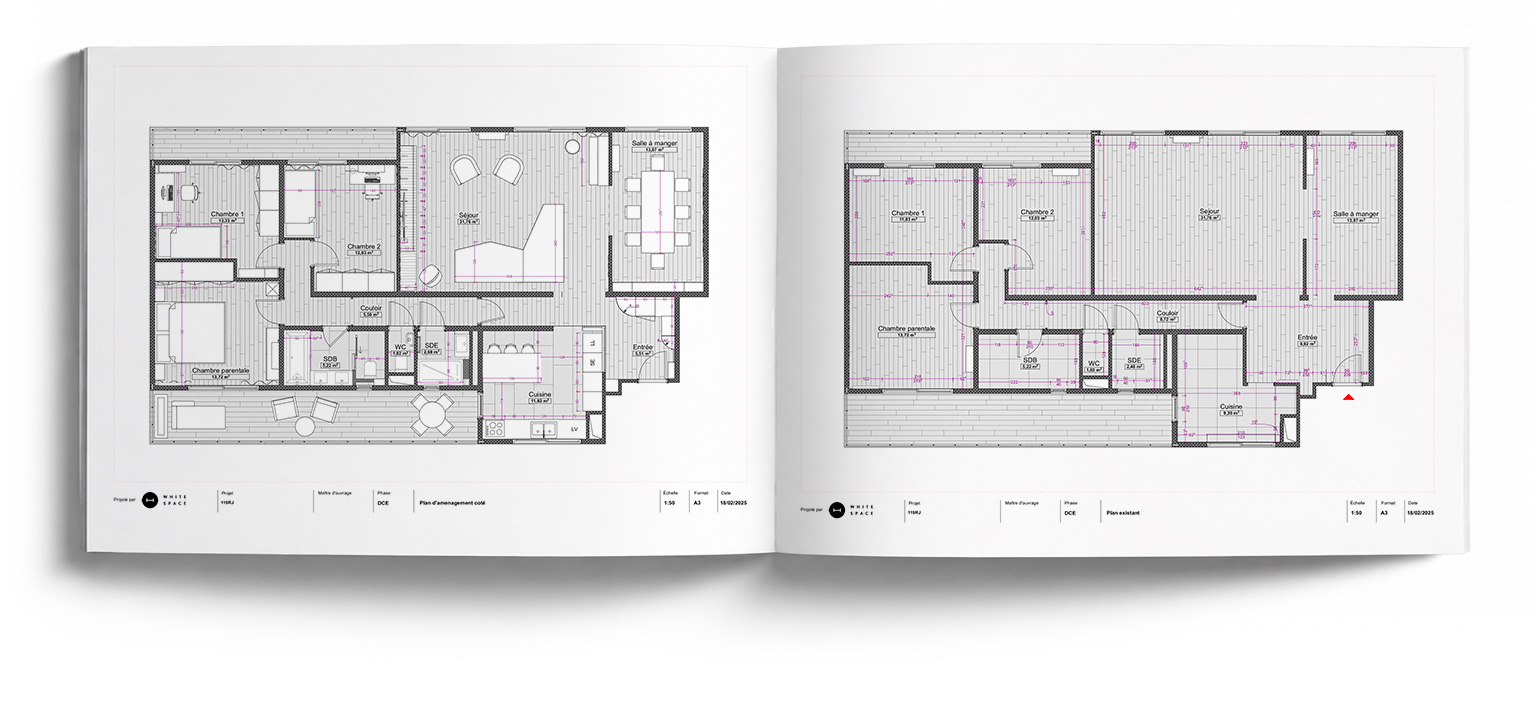
The more precise the project, the smoother the interior renovation becomes. Quotations are more consistent, schedules more realistic, and the risk of mistakes or changes during construction is considerably reduced.
A Good Contractor Executes the Project — It Does Not Invent It
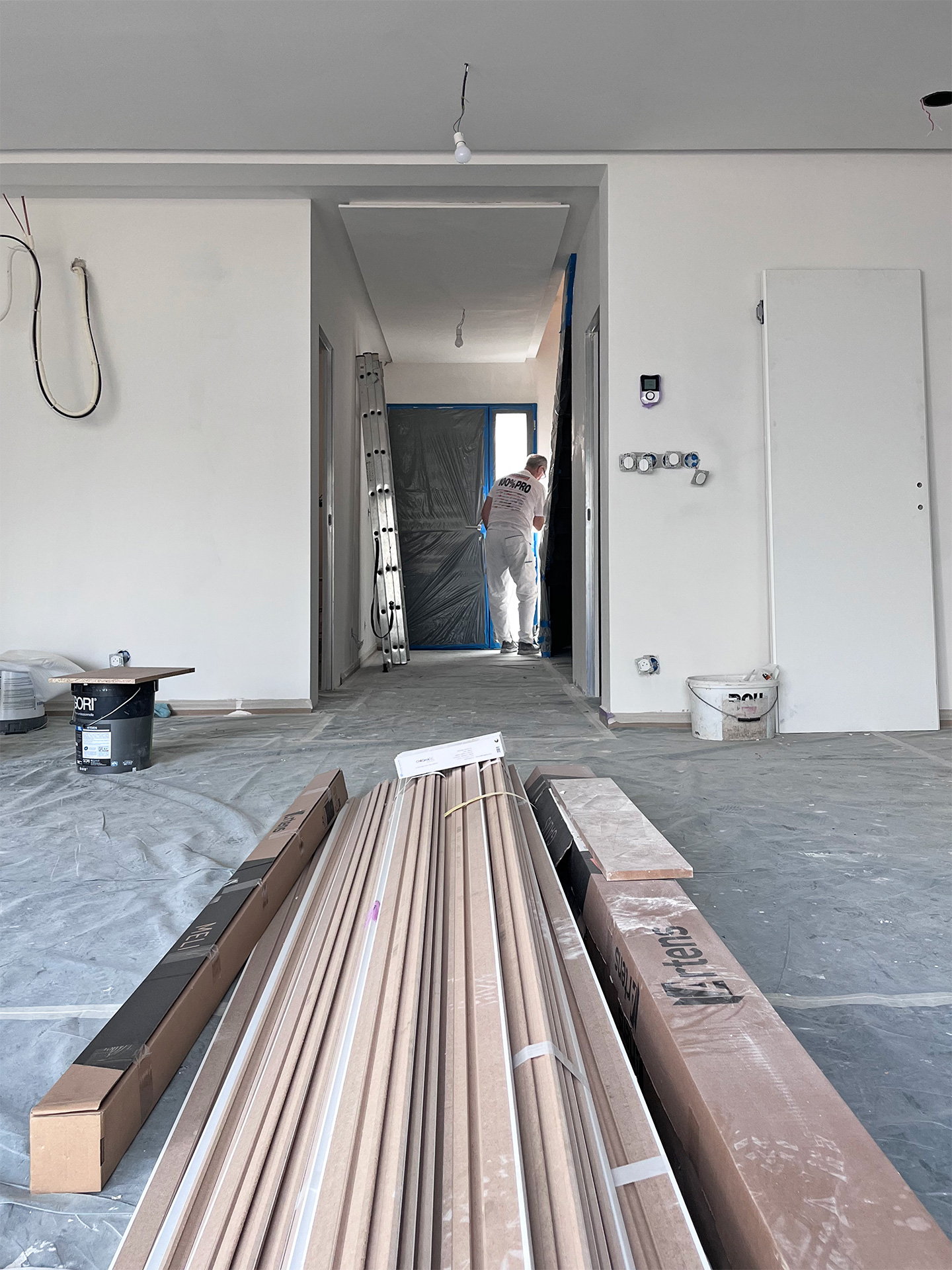
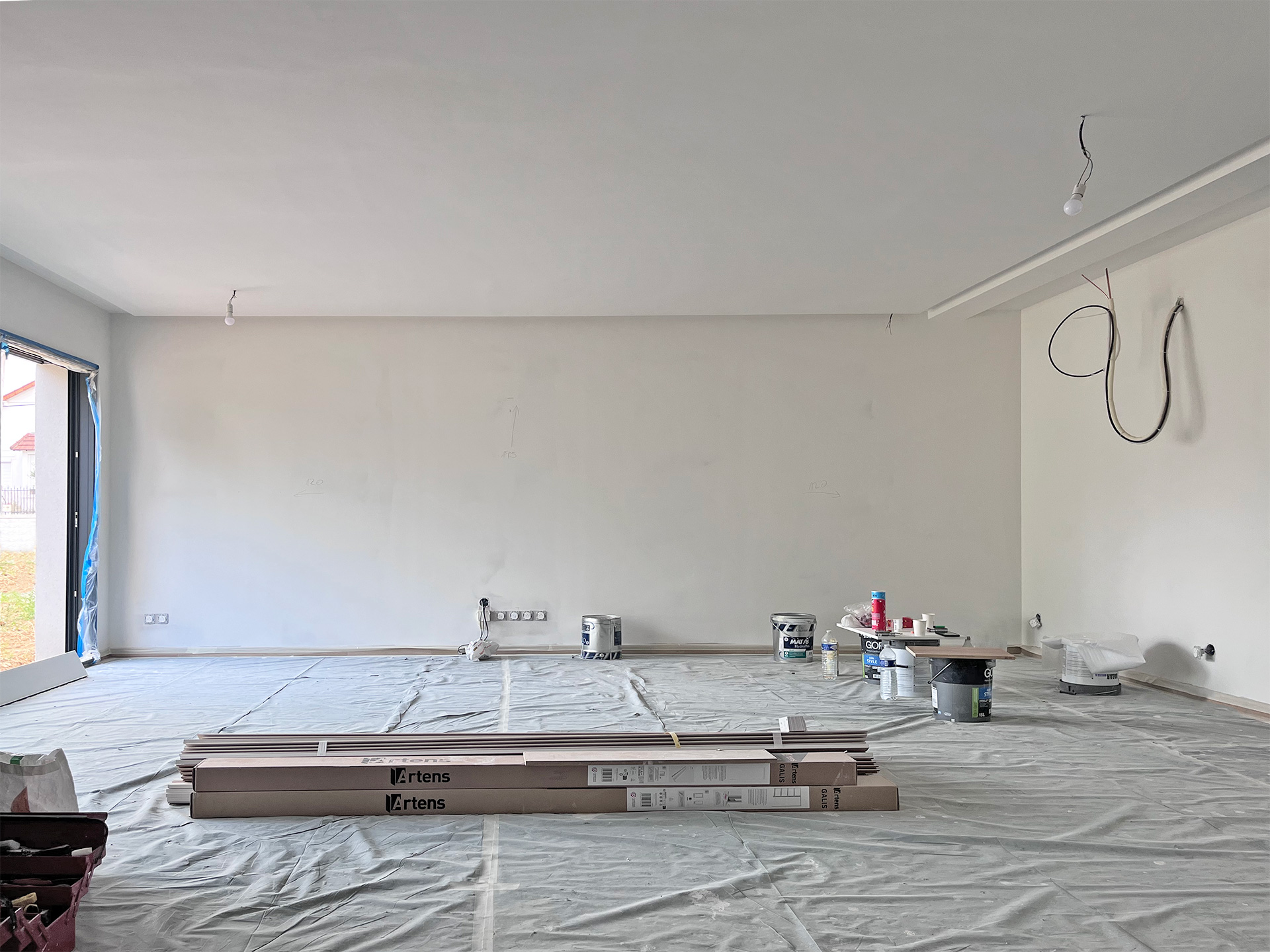
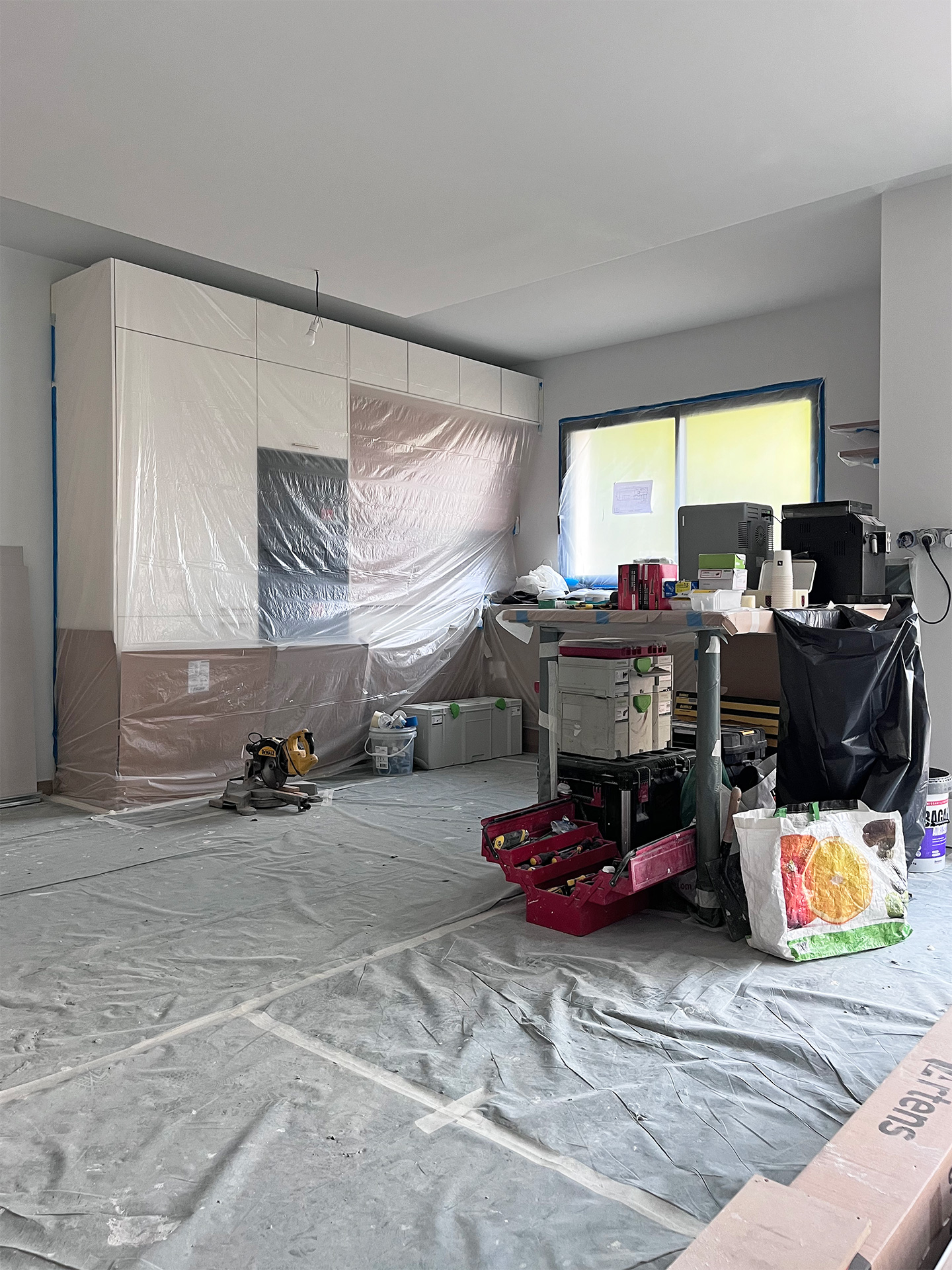
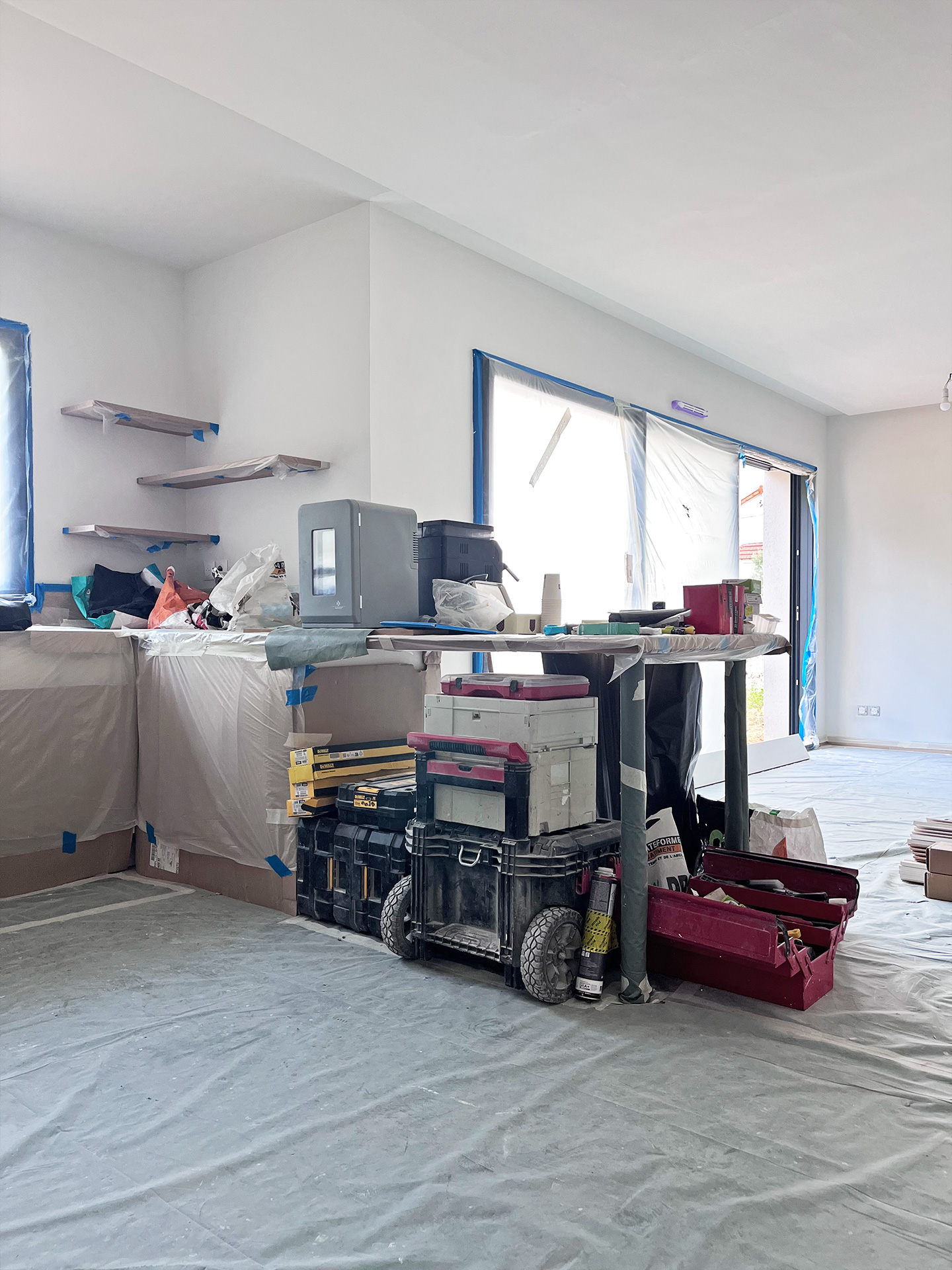
The quality of apartment renovation work naturally depends on the skills of the tradespeople. However, even the best teams cannot replace a clear and detailed design project.
The role of a renovation contractor is to implement solutions defined in advance. When plans, technical details and layout choices are established before construction begins, the work becomes more efficient and far fewer decisions need to be made on site.
This organisation makes an apartment renovation calmer and more predictable.
The role of a renovation contractor is to implement solutions defined in advance. When plans, technical details and layout choices are established before construction begins, the work becomes more efficient and far fewer decisions need to be made on site.
This organisation makes an apartment renovation calmer and more predictable.
The Interior Designer as Conductor
One essential link remains between the design project and construction: coordination.
Throughout the works, the interior designer ensures consistency between the project objectives, technical constraints and the work of the different trades. Their role is to anticipate problems, coordinate decisions and preserve the overall vision of the interior.
Like a conductor, the designer makes sure that everyone is working in the same direction, limiting improvisation and helping guarantee the quality of the final result.
Throughout the works, the interior designer ensures consistency between the project objectives, technical constraints and the work of the different trades. Their role is to anticipate problems, coordinate decisions and preserve the overall vision of the interior.
Like a conductor, the designer makes sure that everyone is working in the same direction, limiting improvisation and helping guarantee the quality of the final result.

A successful interior renovation is rarely a matter of chance.
Whether it involves renovating an apartment, transforming the interior of a house or completely restructuring a space, the result always depends on three elements: a solid project, a reliable team and effective coordination.
In reality, interior renovation work does not begin with demolition. It begins with a plan.
Whether it involves renovating an apartment, transforming the interior of a house or completely restructuring a space, the result always depends on three elements: a solid project, a reliable team and effective coordination.
In reality, interior renovation work does not begin with demolition. It begins with a plan.
June 2026