A Bathroom Cube Integrated into the Bedroom
Integrating a bathroom into a bedroom is an increasingly common solution in contemporary interiors. It creates a more open and fluid space, but also raises an important question: how can a new volume be added without making the room feel visually heavy?
In Project 98 JV, the bathroom was designed as a genuine architectural object integrated into the bedroom. A self-contained volume accommodates the shower, basin and toilet while contributing to the overall composition of the space.
In Project 98 JV, the bathroom was designed as a genuine architectural object integrated into the bedroom. A self-contained volume accommodates the shower, basin and toilet while contributing to the overall composition of the space.
At first glance, a bathroom cube in the middle of a bedroom can appear massive. Any additional volume risks visually reducing the space and competing with the existing architecture. Our objective was therefore not to hide this volume, but to integrate it naturally into the overall design.
The first tool we used was glass. Transparent partitions allow natural light to circulate freely and considerably reduce the feeling of separation between the bedroom and bathroom.
The first tool we used was glass. Transparent partitions allow natural light to circulate freely and considerably reduce the feeling of separation between the bedroom and bathroom.
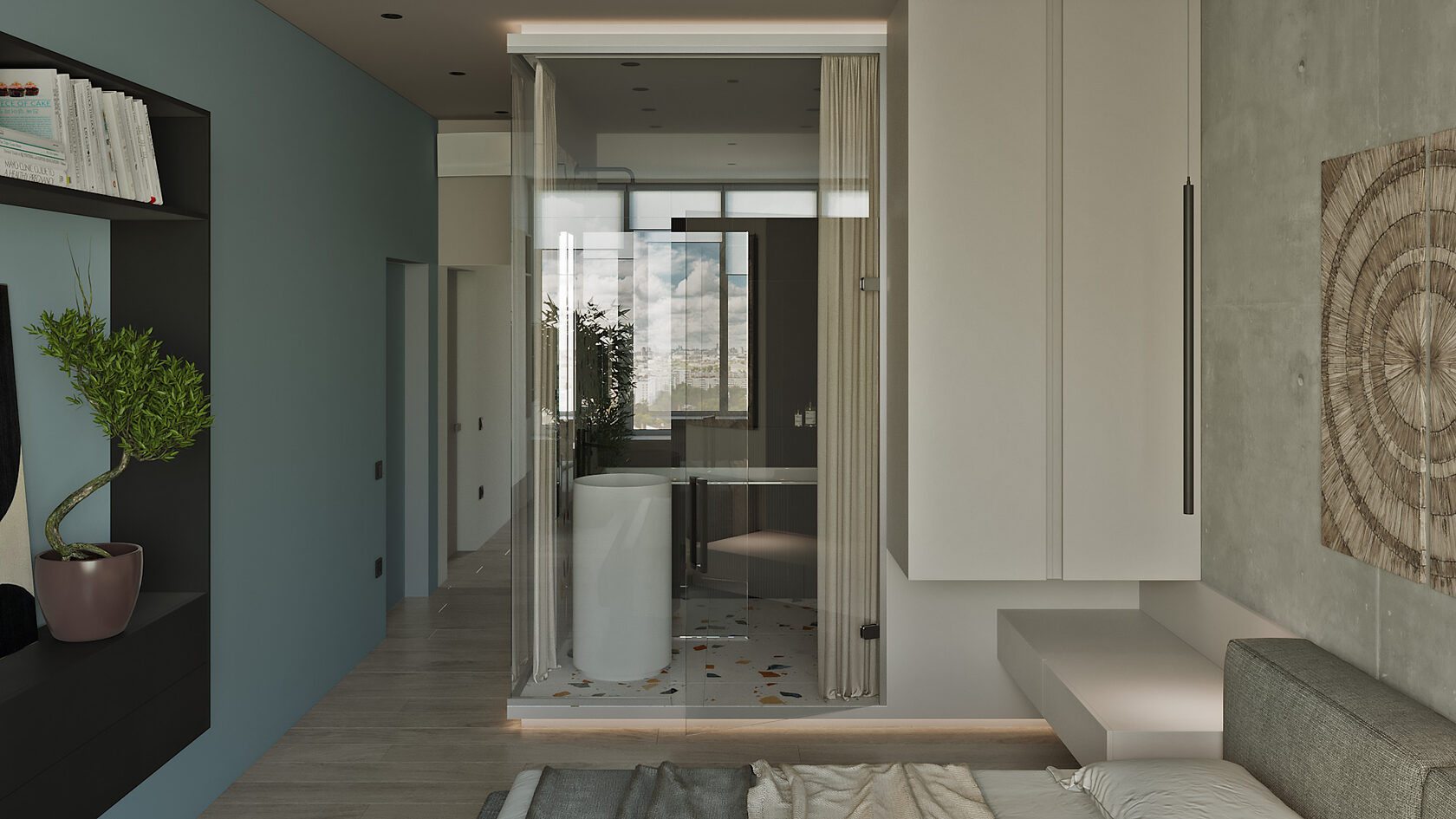
The second element, and probably the most important, is lighting.
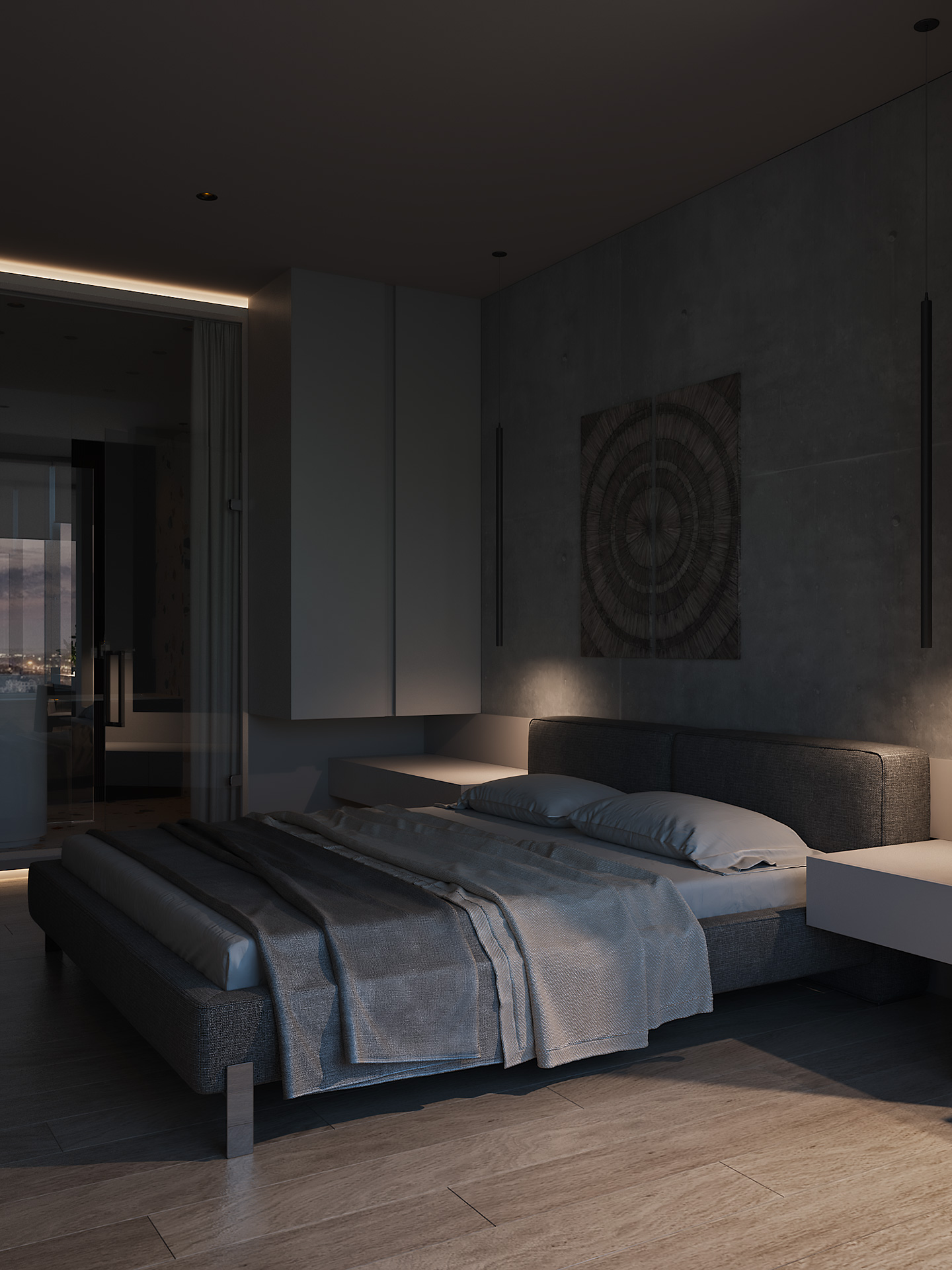
Indirect lighting concealed at the top and bottom of the cube creates a subtle visual separation between the volume, the ceiling and the floor. This lighting makes the cube appear lighter, almost as if it were floating in the space.
The architectural lighting also becomes a genuine lighting scenario for the bedroom. In the evening, when the main lighting is switched off, the cube becomes a luminous feature in its own right and contributes to the overall atmosphere of the room.
The architectural lighting also becomes a genuine lighting scenario for the bedroom. In the evening, when the main lighting is switched off, the cube becomes a luminous feature in its own right and contributes to the overall atmosphere of the room.
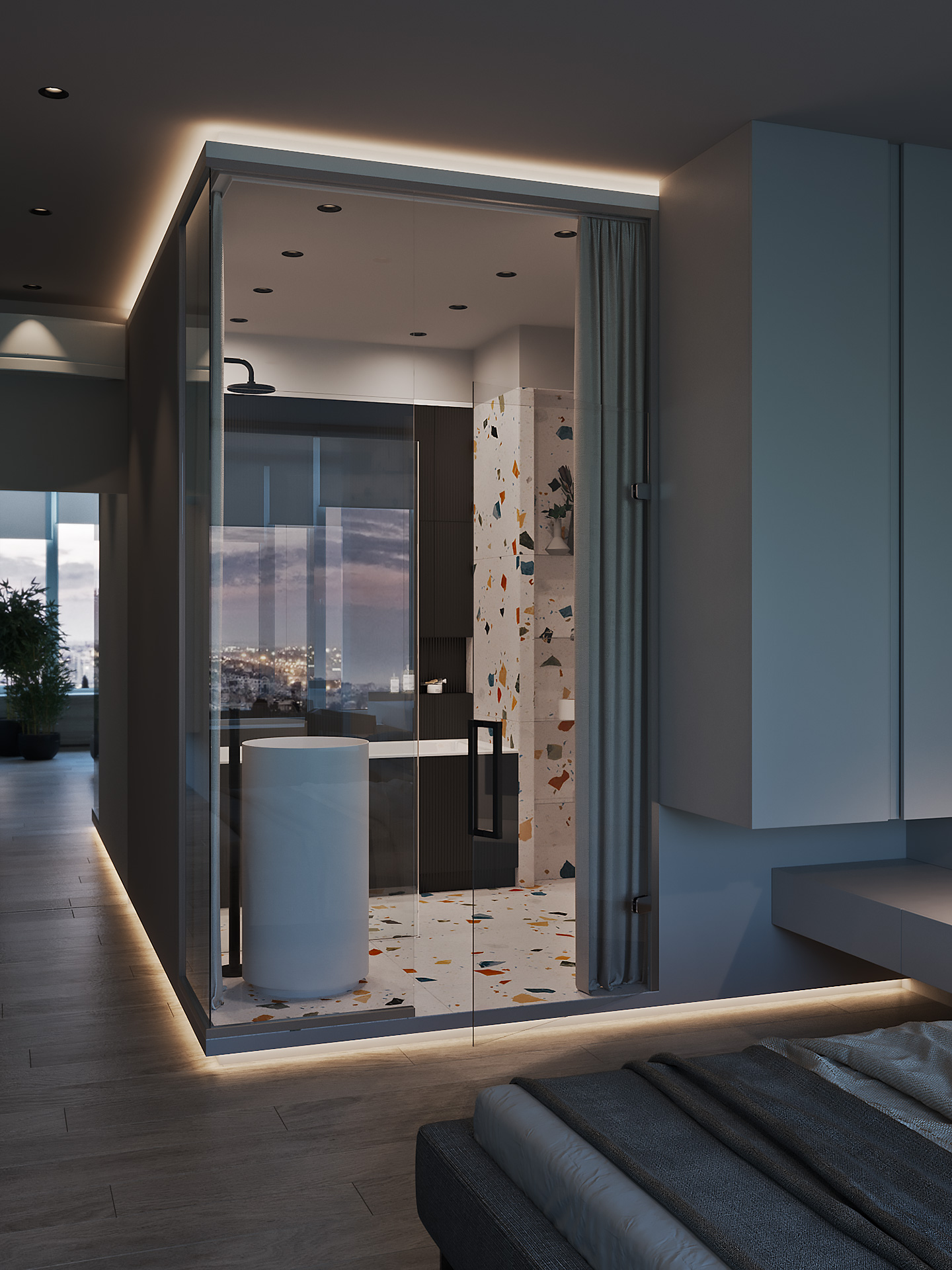
Creating the walk-in shower also introduced a technical constraint. To integrate the drainage without a visible threshold, we had to raise the entire bathroom floor by 12 cm.
Rather than treating this as an inconvenience, we deliberately lowered the ceiling of the cube by the same amount. This reinforced the perception of the volume and emphasised its integration into the bedroom.
Rather than treating this as an inconvenience, we deliberately lowered the ceiling of the cube by the same amount. This reinforced the perception of the volume and emphasised its integration into the bedroom.
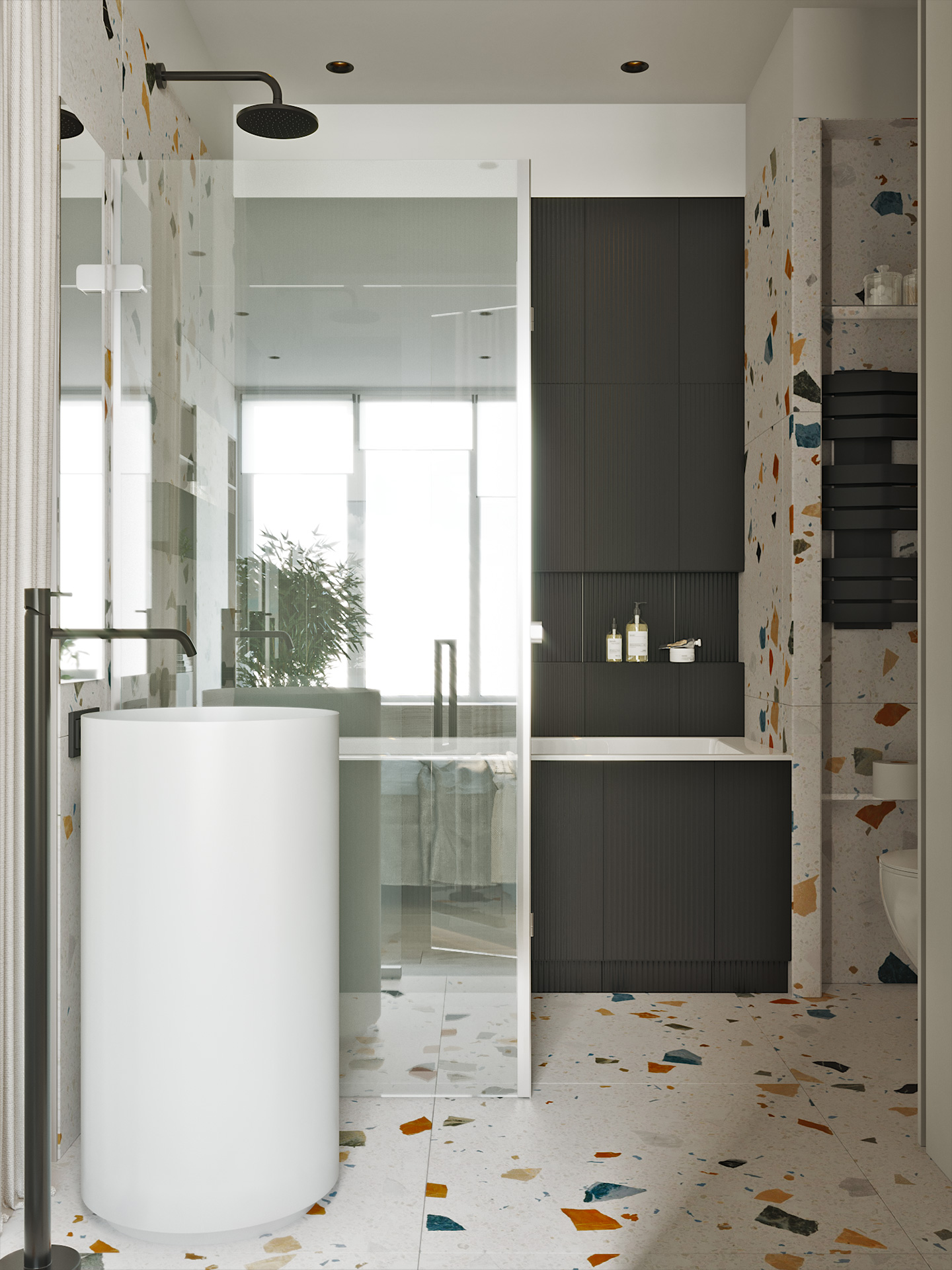
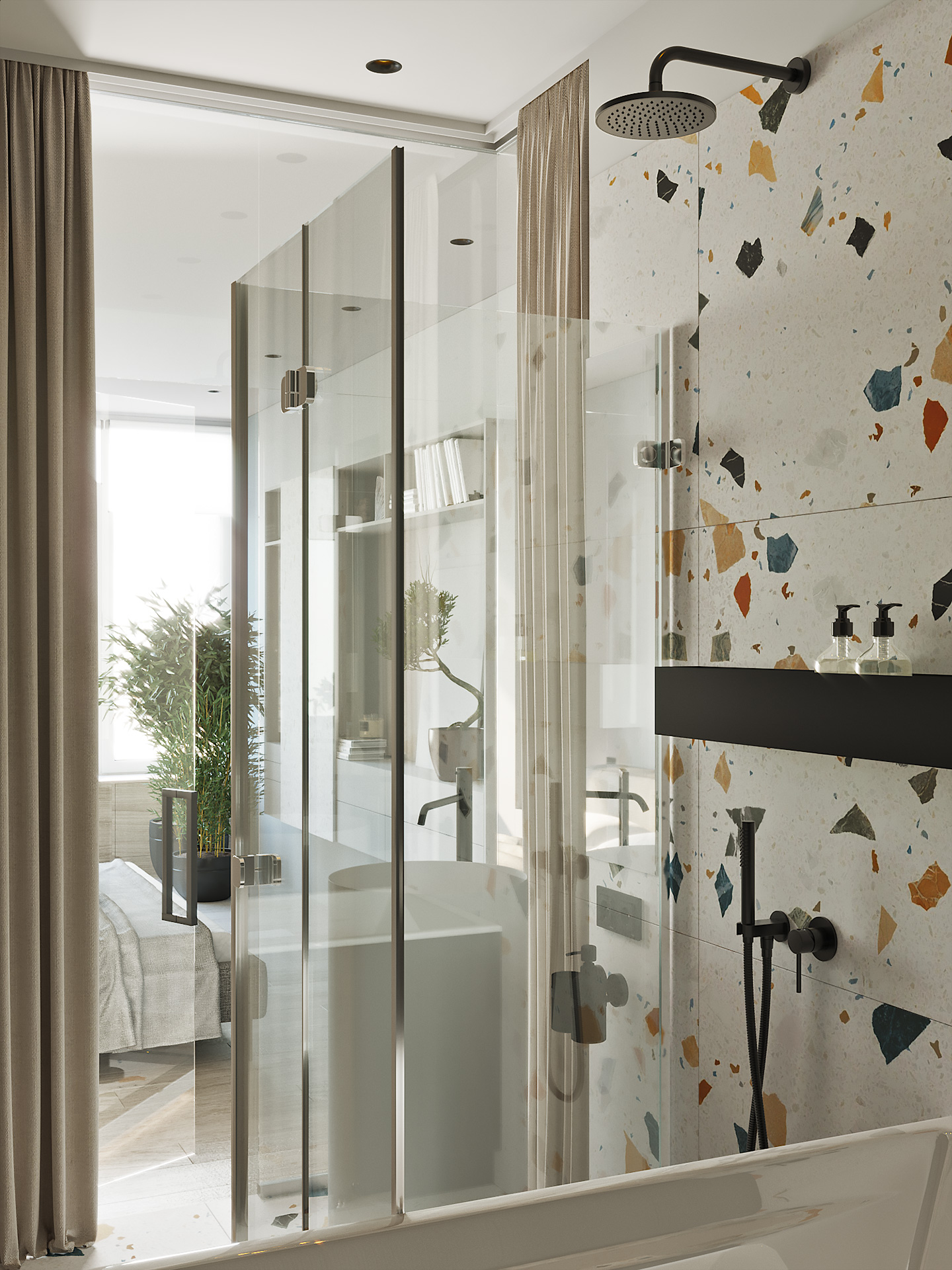
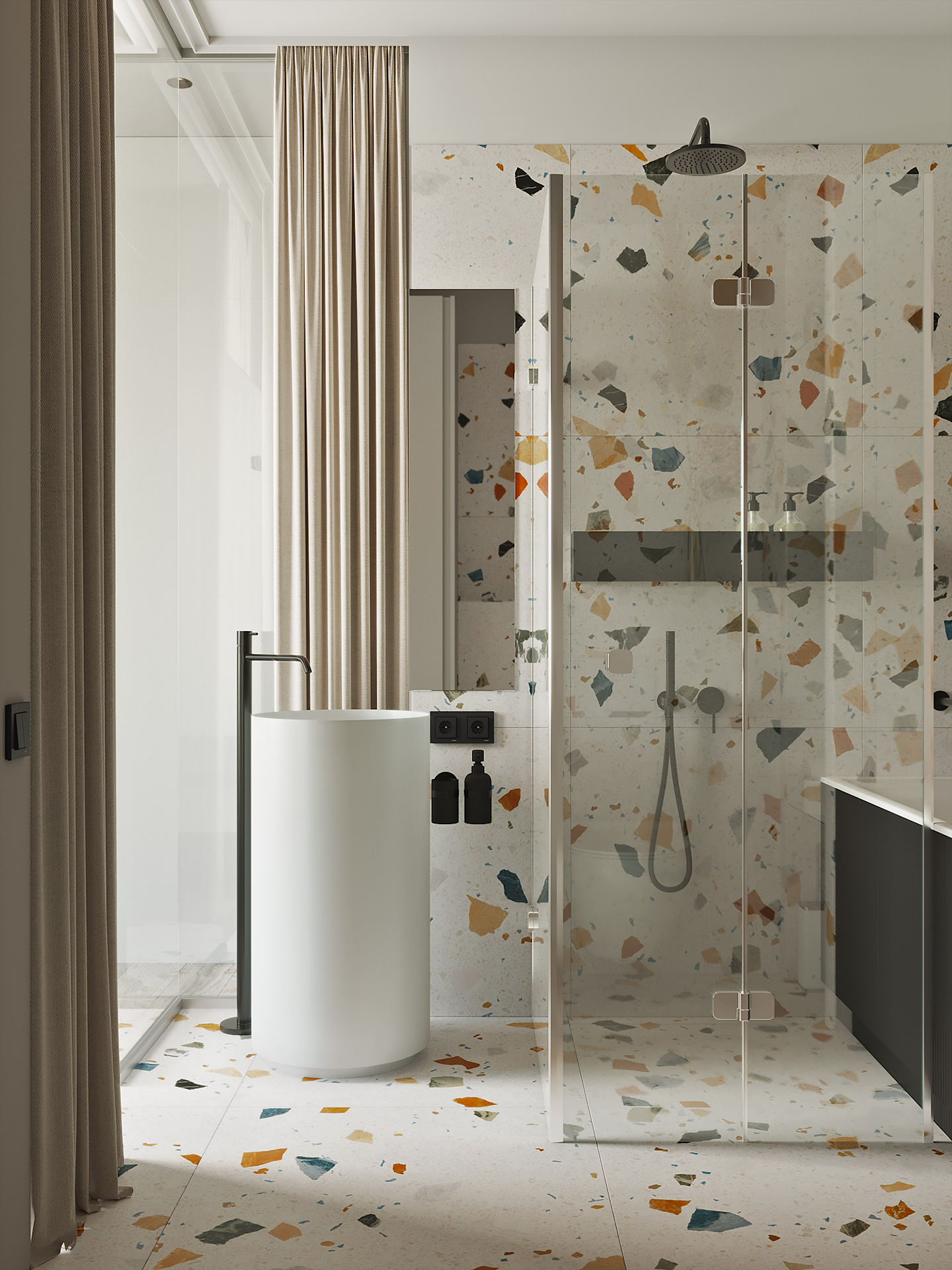
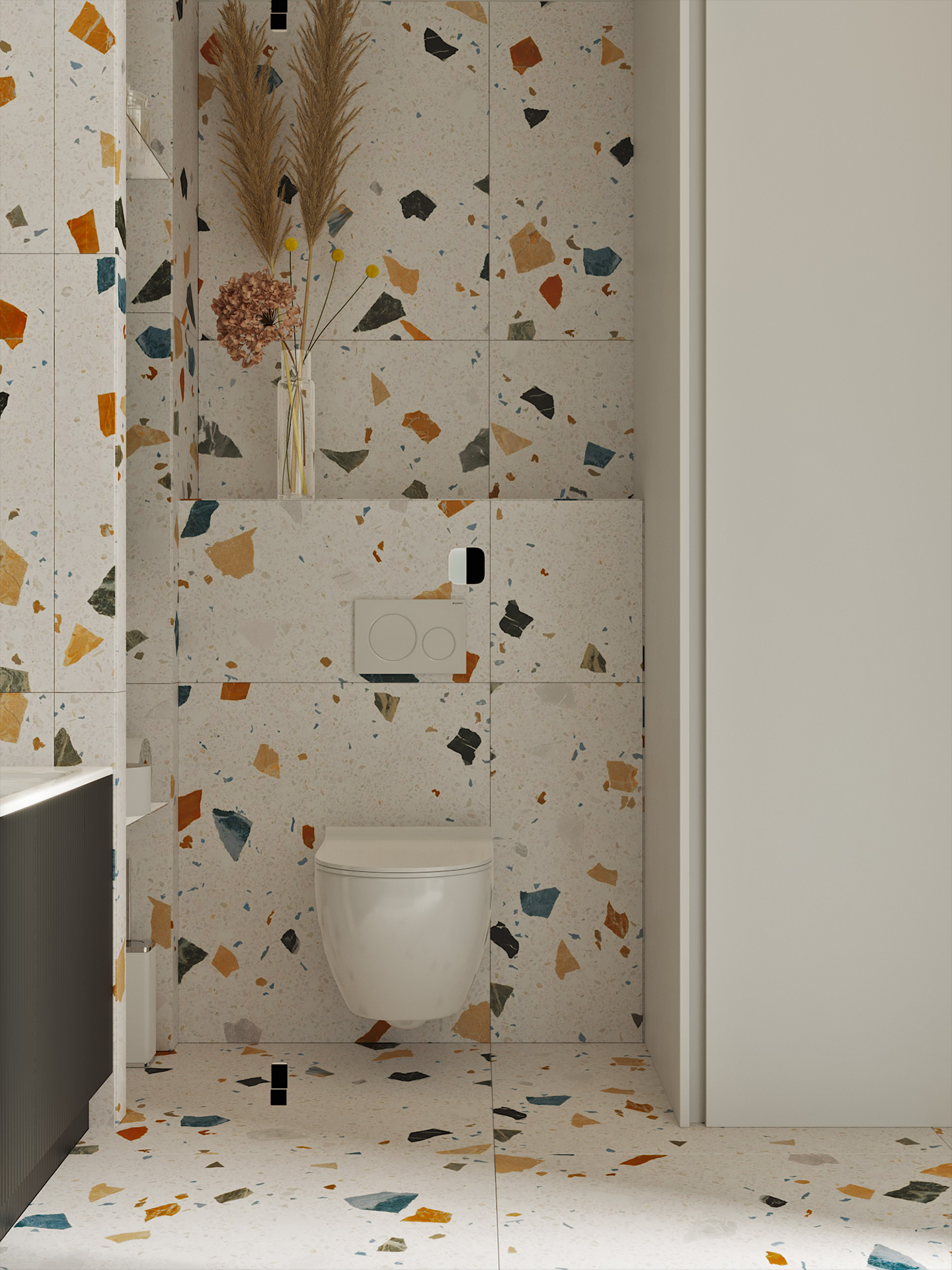
This project perfectly illustrates how interior lighting can become a genuine architectural tool. Beyond its primary function, it changes the perception of volumes and transforms a bathroom within the bedroom into a coherent, light and fully integrated element of the living space.
June 2026